Ancient settlers have left their mark on the Gironès, visible today in numerous archaeological remains scattered across the region. The Archaeological Getaway in the Gironès offers a journey to the origins of the territory, from prehistory to the Middle Ages, combining archaeological sites, landscapes, and inhabited settlements that help us understand how human occupation evolved over time.
The route begins in Vilablareix, in the area of Sant Menna and La Torratxa, a site that provides insight into Late Antique and early medieval settlement, showing the continuity of occupation and the way communities adapted to historical and social changes.
Just a few kilometers away, in the municipality of Sarrià de Ter, the Roman villa of Pla de l’Horta is one of the most significant archaeological complexes in the Gironès for understanding territorial organization during the Roman period. The remains of the villa, linked to agricultural production and communication networks, show how the landscape was transformed to meet the economic and social needs of the time.
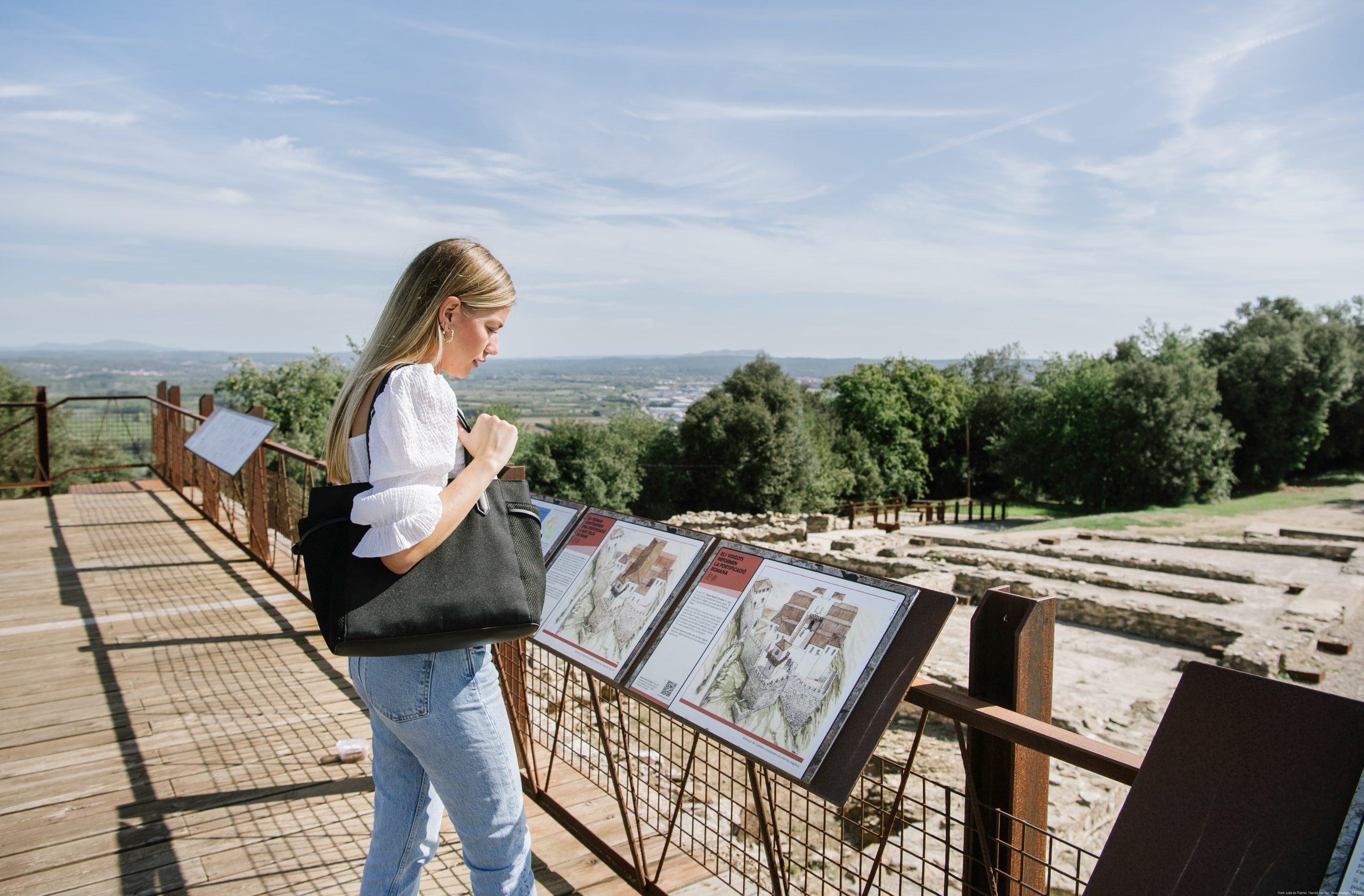
The route continues in Sant Julià de Ramis, where the Iberian settlement of Castellum Fractum, located in a strategic position overlooking the Ter valley, reveals the importance of controlling territory and communication routes prior to the foundation of the Roman city of Girona. The site, together with its surrounding natural environment, offers a clear understanding of the origins of settlement in the region.
The proposal is completed with the Castle of Cervià de Ter, a monumental complex that illustrates how the territory was organized during the Middle Ages. The castle and the monastery of Santa Maria, located at a strategic point near the Ter River, demonstrate the continuity of human occupation and the evolution of settlement from ancient societies to the feudal structuring of the territory.
This group of sites, spread across plains, hills, and river valleys, forms an ideal proposal for discovering the ancient Gironès over 2 or 3 days, combining archaeological heritage, landscape, and unhurried experiences.
Below you can consult the proposed itinerary of the Archaeological Getaway:
ROUTES
Walking routes allow visitors to complete their archaeological discovery by connecting heritage and landscape. Itineraries such as El Congost and the Sants Metges mountain offer an experience that combines nature and history, exploring an environment shaped over centuries and closely linked to the earliest human settlements. Likewise, the route “History at the Foot of Sant Roc” leads to La Torratxa, or Torre dels Moros, a Roman funerary monument built with volcanic soil, sand, lime, stone, bricks, and ceramic fragments. Further along, visitors reach the church of Sant Menna, where the remains of an ancient Roman villa can be seen.
WHERE TO EAT
The discovery of archaeological heritage can be complemented with a gastronomic break at local restaurants and establishments in the Gironès, where traditional cuisine and locally sourced products connect past and present through flavor. It is another way to continue the journey through the territory from a different perspective, savoring recipes rooted in the land.
WHAT TO DO
Among the standout experiences of the getaway is a visit to AQVA Gerunda Roman Baths, an urban spa offering a unique sensory experience in a space rich in history. Visitors can relax with thermal baths and massages while appreciating the heritage value of the building, a site that preserves Roman and medieval remains and connects guests directly with nearly two thousand years of the city’s history.
WHERE TO STAY
To extend your stay, the Gironès offers a wide range of rural accommodations and charming hotels, located both in small villages and in peaceful natural surroundings. Staying close to the archaeological sites and suggested routes allows you to experience the getaway at a relaxed pace, taking the time to discover the territory without rush and with a deeper perspective.
EVENTS
Throughout the year, the archaeological heritage of the Gironès comes to life through cultural events that bring history closer to the public. In July, the VIAVEU Festival, promoted by the Sant Julià de Ramis Town Council since 2013, presents intimate concerts with the voice as the central element, held within the heritage complex of the Sant Julià de Ramis mountain. In spring, the Castle of Cervià de Ter Festival Day revives medieval life with activities, historical reenactments, and period settings, transforming the castle and its surroundings into a living stage of the past.
A proposal to rediscover the Gironès at your own pace.
Explore the other getaways in the Gironès and plan your next visit.